Into the Desert (all the way)

This morning we started our trek into the desert. Our guide/driver loaded us into his van bright and early and we headed off.
Our first stop was in Ifrane for breakfast. The Moroccans call the town "The Swiss Alps" or "European Town" of Morocco. It is up in the Middle Atlas mountains, so it gets snow. Because of the snow, the houses all have steep peaked roofs (evoking Swiss or European resemblance) rather than the flat-roofed, box-like homes seen everywhere else. They even have a Ski Station up here, but apparently they have no proper machinery to clear the roads, except of course, for the king, who does come to ski.
Not far from Ifrane, we stopped on the side of the road to feed monkeys. They were very accustomed to tourists and had no fear approaching us for food (cherries and peanuts). One was bold enough to snatch the bag of peanuts out of Dave's hand before he had a chance to open it.


After a long drive through the mountains and into the desert we finally reached Merzouga.


We traded the luxury of our AC van to climb on top of camels and head into the hot, dry sand dunes of the Sahara. In a short time, our camel guide led our little caravan where we could no longer see the town and were surrounded by sand banks. We did not feel that we were alone, however, other camel caravans could be seen in the distance and the occasional ATV would pop over a ridge and disappear again.
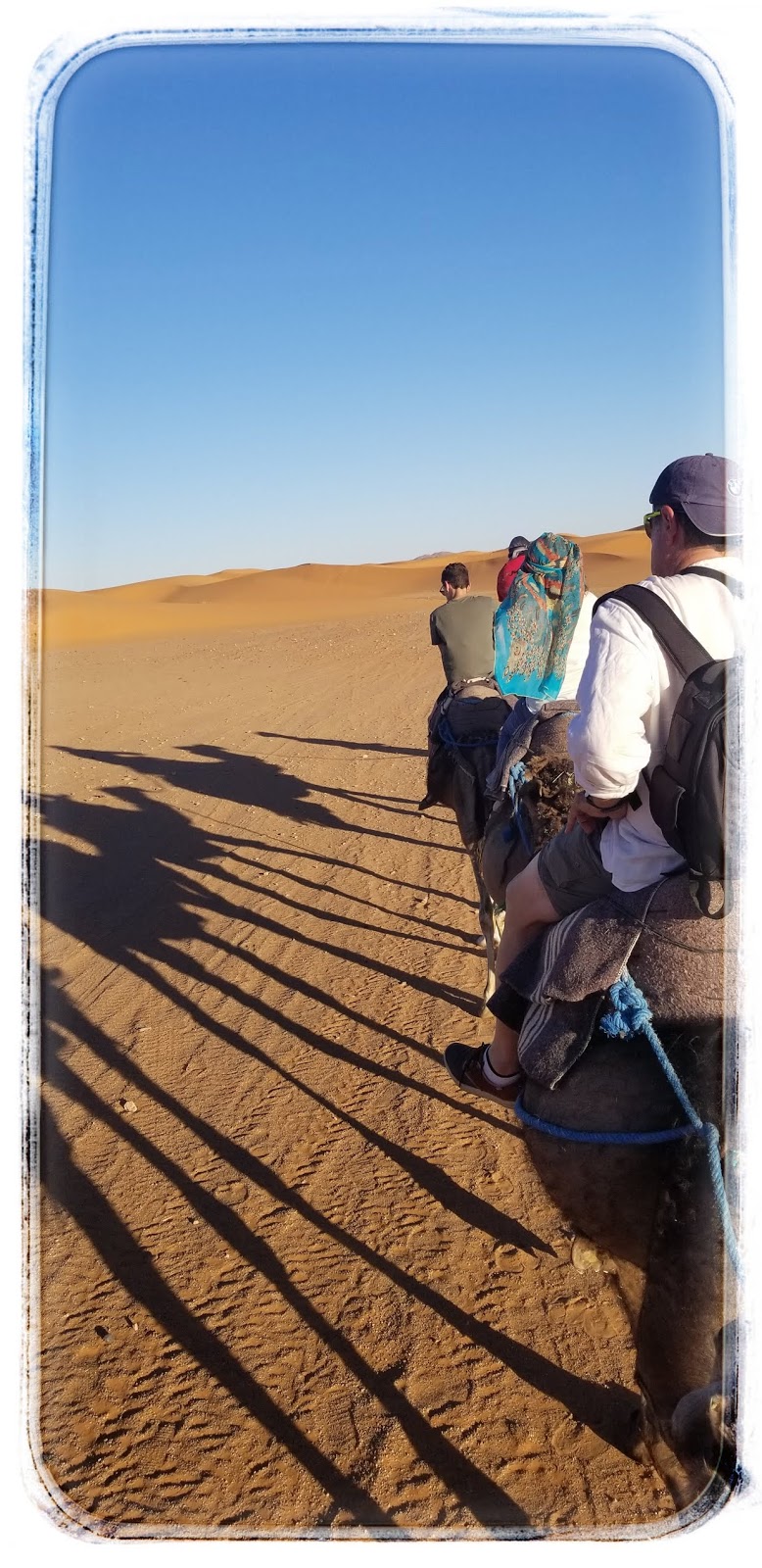
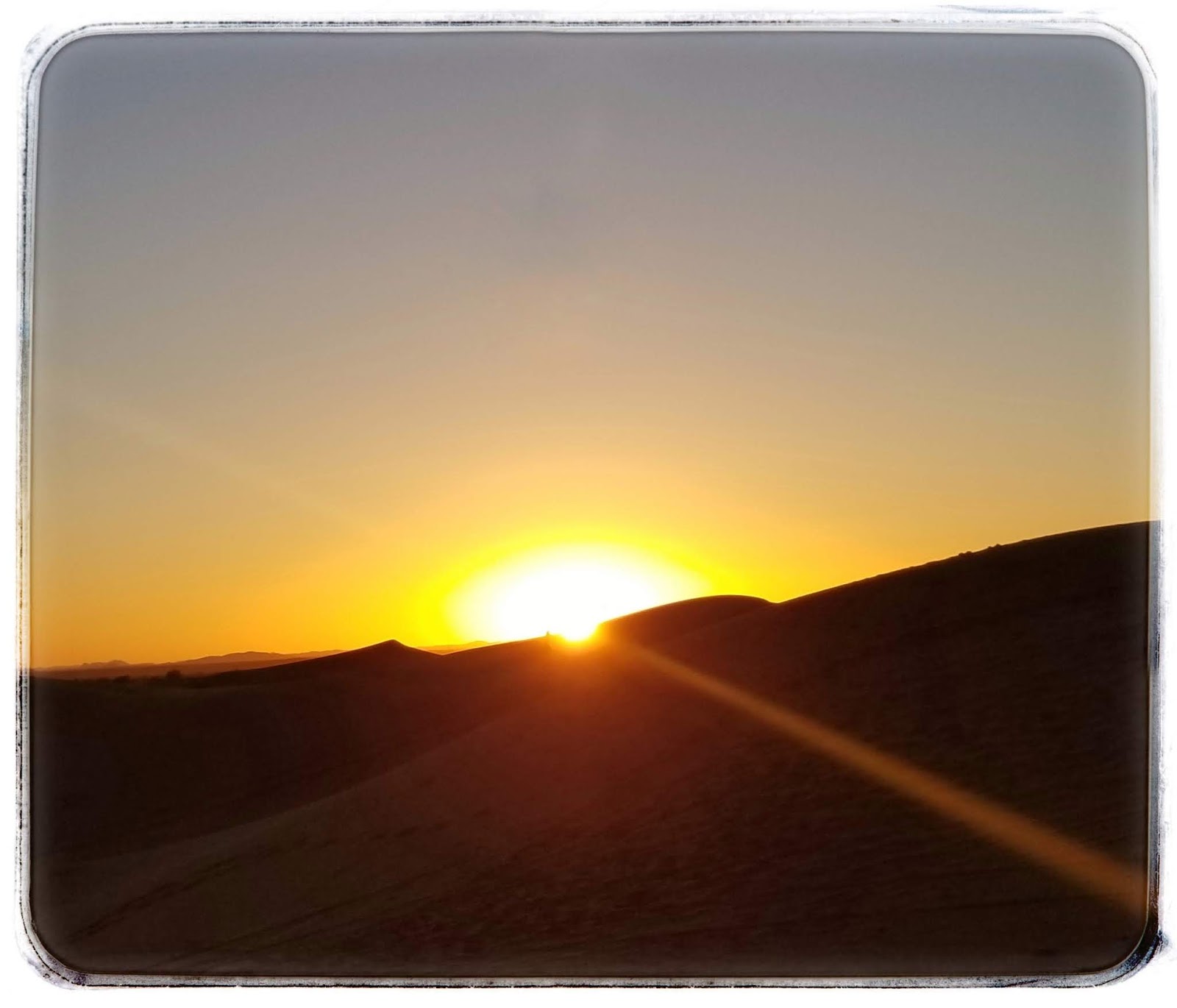
Before reaching camp, we stopped to climb a little higher by foot, to a ridge to watch the sunset.
Some couldn't resist playing in the giant sandbox.

When we reached our camp, tea was, of course, served.
In the evening, after a tradional Berber dinner we stepped away from the light of our camp to star gaze. The sky was magnificent; suffused with so many celestial beings!
Before bed, we sat around a camp fire and listened while our Berber hosts played drums and sang songs. We even did a little dancing and drumming too. 


Henna and Weaver

Today was our last day in Fes.
We returned to the souk to have Henna tattoos put on the girls hands. As a little bonus, the artist also wrote each of the girls' names in Arabic.


While they were getting painted, we admired more of the detailed Fes architecture.


Afterwards, we were led upstairs in a textiles shop to watch weavers working away on the looms. Once again, we admired the craftsmanship of the beautiful fabric created.


Our last dinner in Fes was at a rooftop restaurant that looked across the whole Old Town. We watched the sunset over the city and even spied our palace room in the distance. 

Cereamics and Carpets

A member of the staff from our palace took us to a ceramic factory today.
We learned about the type of clay unique to Fes - white, volcanic, as opposed to red, found elsewhere in Morocco. Our guide showed us demonstrations of the different steps involved from molding the clay, painting pottery, cutting tiles, and the setting the pattern for a table top or fountain.
Alia got to try her hand at molding a plate on the wheel. She did a great job.


As artists painted pots and plates, our guide described the difference between Berber, Arabic and Jewish patterns and how many of the pottery have combinations of two, or all three.

We watched a man with a ice-pick-type hammer, chip away tiny stars out of a tile.


On the floor there was a work-in-progress of the setting of the pattern for a tabletop. Each tiny tile is place upside-down before they are cemented together to create the intricate surface.


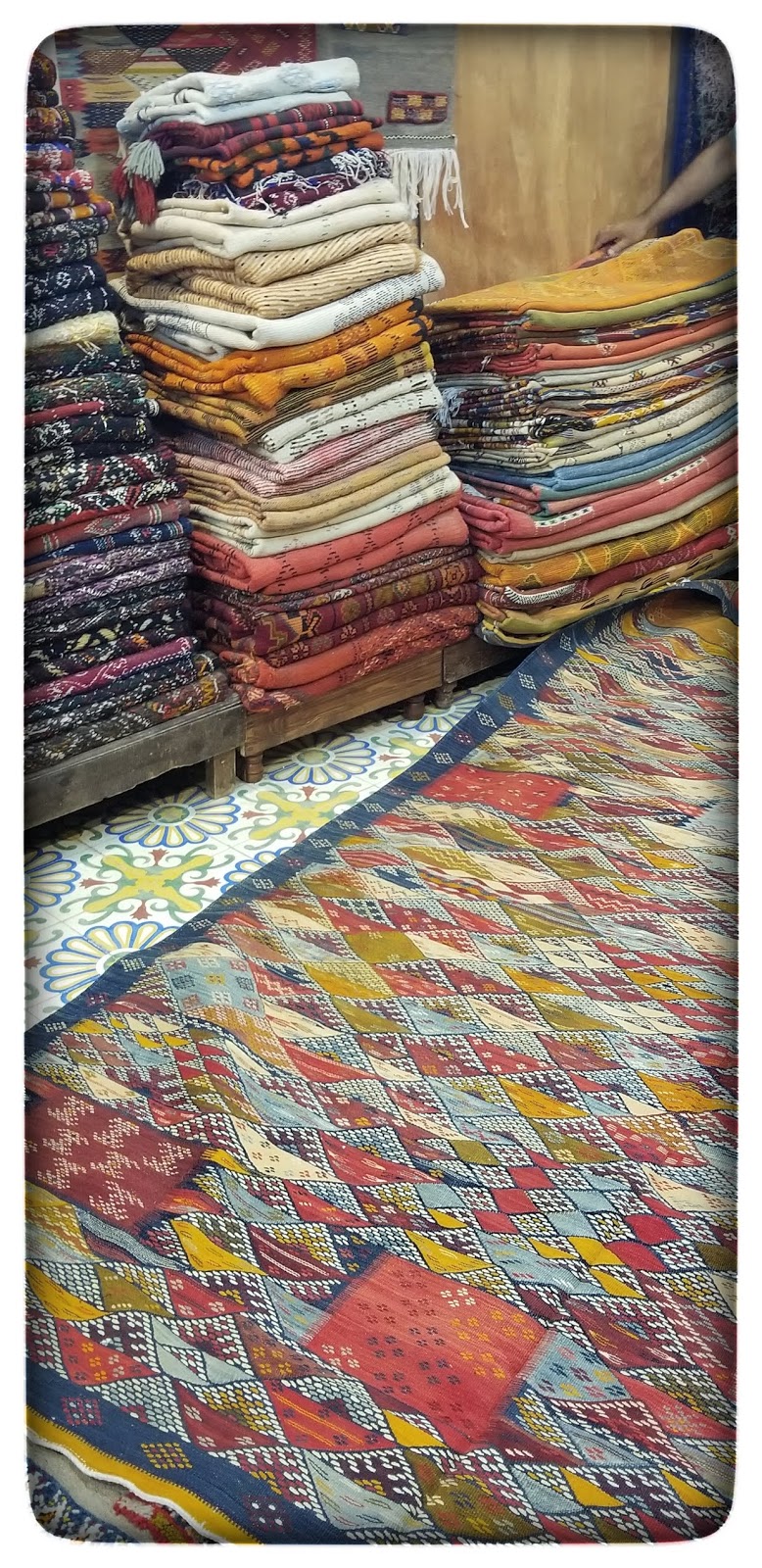
After the ceramic factory, we visited a carpet shop in the souk and learned about the creation and ways to identify an authentic Berber carpet. Apparently, they are made by "crazy ladies" in the Atlas mountains and only have tassels at one end, so that the length of the carpet can be changed.

It was quite amazing to watch and learn about the craftmanship that go into the ceramics and carpets.

Volubilis and Meknes

Our daytrip excursion took us through the countryside up narrow, mountainside roads through olive groves and sheep herds (literally). 


Our GPS even routed us right into a full street market in progress. We had no choice but to keep moving forward (slowly) through the crowd. It was quite entertaining.


Our first destination was Volubilis. Roman and Berber ruins that date back to the 3rd century. Only a fraction of the expansive city has been excavated. We wandered the ancient streets, marvelling at the massive columns and intricate mosaics.


We headed back to Fes through Meknes, where we stopped for lunch and explored the Prison de Kara, an 18th century, subterranean prison (it was nice and cool in there); as well as the market (on foot this time).


In the evening, Dave and I attended a concert by "Quelle Distance Entre Le Soleil et La Terre ?" which was part of a week long International Music Festival in Fes. The concert performers were local children and adolescents from Fes. They created and produced the material which was a compliation of singing, dance, poetry and mime. The venue was a local museum and the performance was presented as the exhibition, so we progressed together through the rooms with the artists to watch them perform.

Afterwards we had dinner at a rooftop restaurant overlooking Fes, right next to a mosque. We had good food and fabulous views.


Tannery

Today's exploration led us through the
"Closed" Souk (Market) to the Chouara Tannery. It's Friday so the markets are supposed to be closed. And they are, for the most part, after 2pm. But some shrewd vendors know the tourists will shop on a Friday, so a few shops were open. I prefer this lesser-crowded vibe of the souk. The narrow streets get to be pretty cramped on a regular day.


Down in the heart of the souk is the Chouara Tannery. From the top floor balcony of the shop, we looked out over the field of emmense vats. Some vats contain quicklime, salt, or pigeon poop (yes, that's what I said - pigeon poop - it's collected by locals in their rooftop coups and brought to the tannery). These are used to clean and prepare the hides - camel, cow, sheep, or goat. Other vats contain only natural dyes, used to colour the hides made from poppy flowers, tumeric, indigo, saffron, etc.


It was fascinating (and a little aromatic, thanks to the pigeon poop), to see this tradional, authentic operation. 

Roadtrip and Palace

We said farewell to Casablanca and headed to Fes via Rabat.
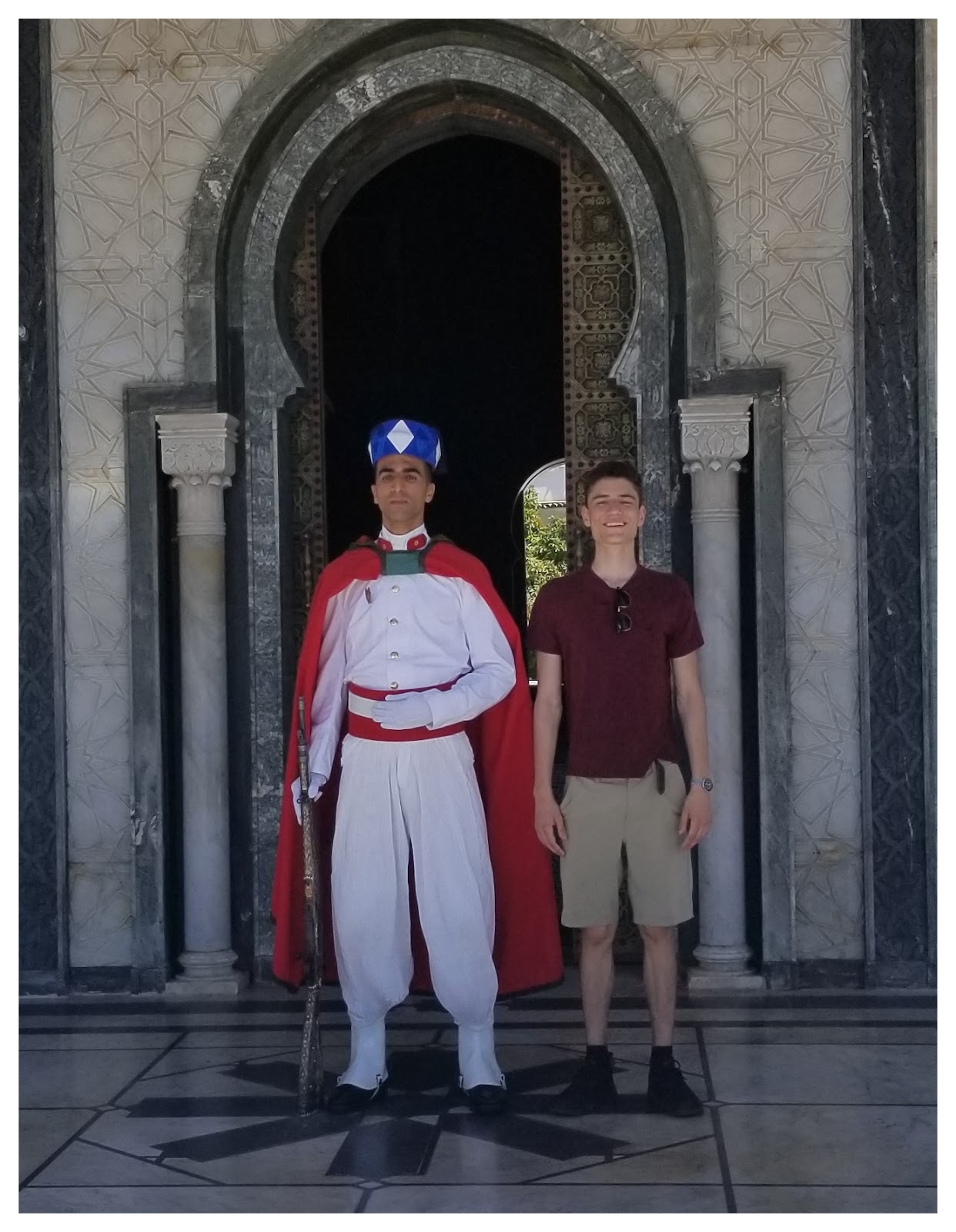
In Rabat, we stopped for lunch and checked out an ancient mosque tower ruin and the Mausoleum of Mohammed V.


Most of the guards we very friendly, letting people pose for pictures and providing some information about the site.


On the road to Fes we went past many, many, many olive groves and sheep. The brown grassy countryside reminded us of a flatter California. 


Once in Fes, we squeezed the car through a narrow street to find our new temporary home - a 19th Century Palace!
The palace could be an extravagant, posh tourist hotel, but instead it is a hidden gem that was forgotten by time until recently and is gently being restored and polished. Antique settees and decor adorn the great rooms with carved, cathedral ceilings and old photographs dot the detailed mosiac walls. Stained glass windows open to a long courtyard below, with fountains, both functional and ornamental.


Staying in this once lavish, but still majestic dwelling, is like being allowed to go beyond the rope barrier in the museum and connect with history.

Beach Day

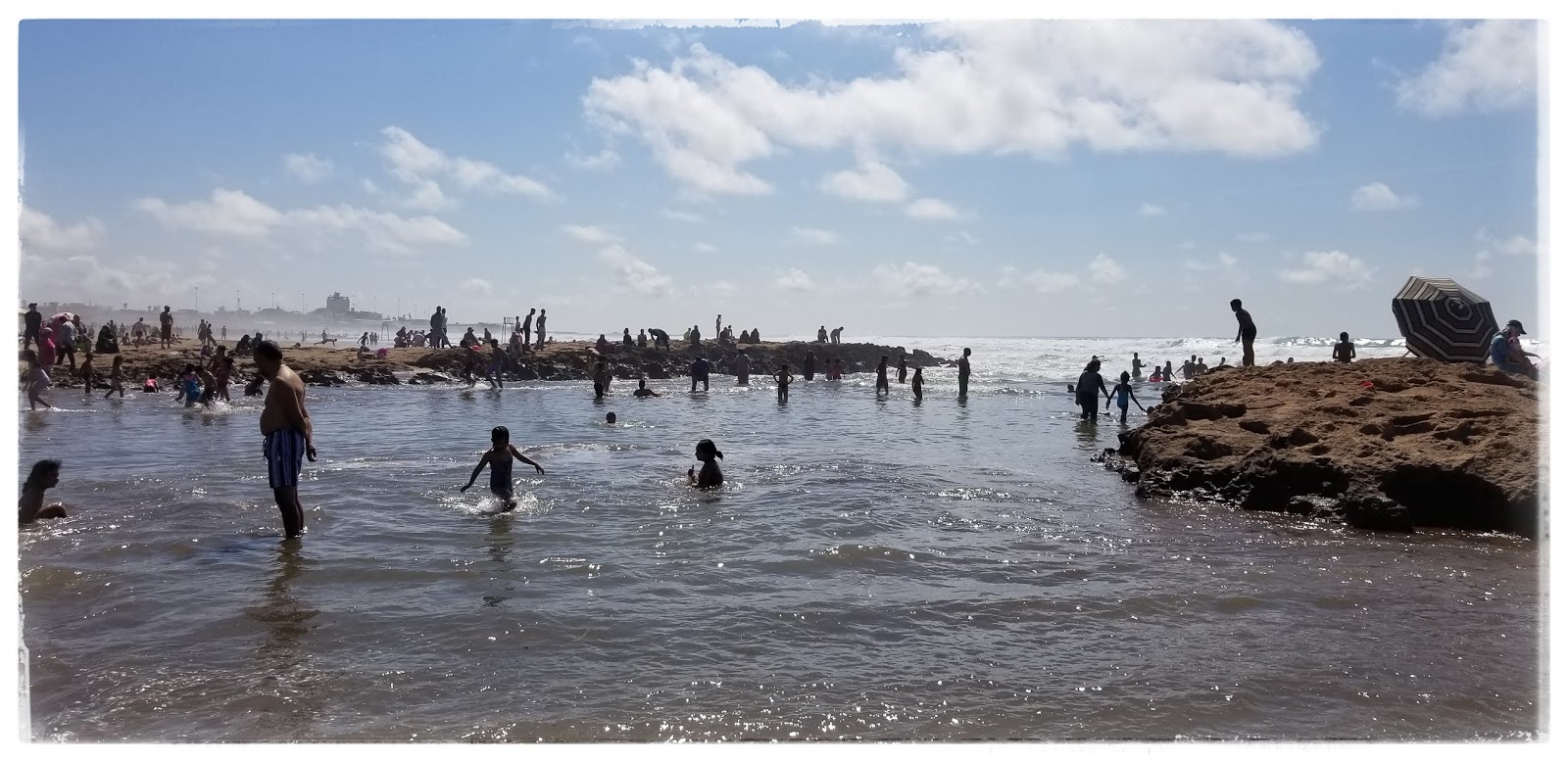
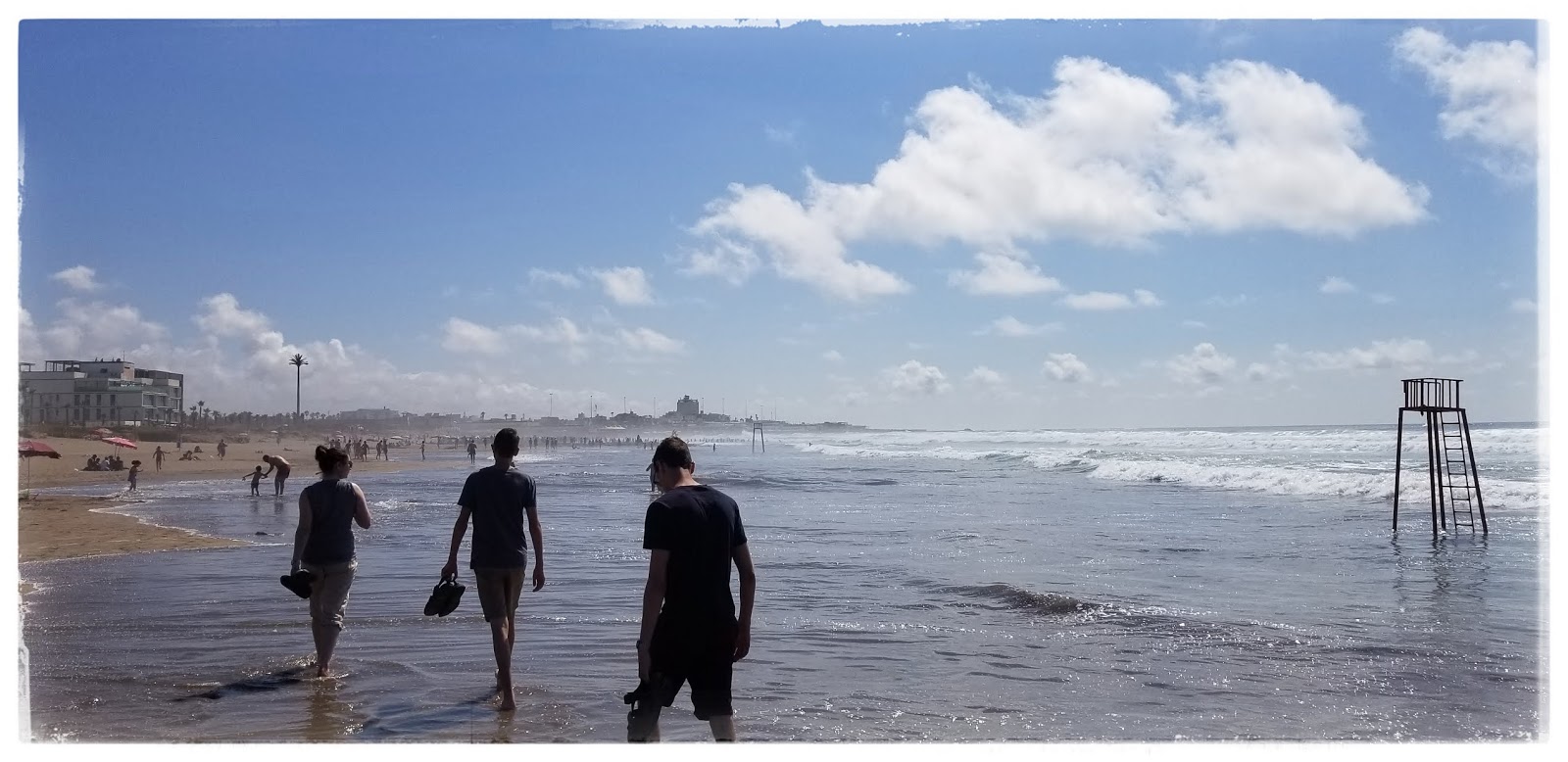
We continued our exploration of the coast today; just below the Hassan II mosque and past the lighthouse.


Breakwalls and rocky shore gave way to sandy beaches.
The waters were quite rough, but the cool, refreshing Atlantic was hard for people to resist.


We were only there to admire the views and dip our toes in. No sunbathing for us today.


It was a slow paced, relaxing way to spend our last day in Casablanca.